What to eat during chemotherapy: gentle, low-glycaemic meals
CANCER SUPPORT · 7 MIN READ
Treatment days change appetite, taste and digestion. These are simple, nourishing ways to keep eating well, coordinated with your oncology team.
Summary
During treatment, aim to stay nourished, hydrated and comfortable, in a way your oncology team supports.
Low-glycaemic, dairy-free, plant-predominant meals, without refined sugar, juice or honey, sweetened with pure monk fruit only.
Small, warm, simple meals such as bone broth and miso are often easiest on treatment days.
Knowing what to eat during chemotherapy can feel overwhelming. Appetite may disappear, food may taste metallic or bland, and nausea, mouth soreness or changes in digestion can make even favourite meals difficult. On top of that, there is a great deal of conflicting advice.
The aim during treatment is simple: to keep you nourished, hydrated and as comfortable as possible, in a way your oncology team is aware of and comfortable with.
The principles
Low-glycaemic. Steady blood sugar helps steady energy and mood through treatment. Build meals around protein, vegetables and healthy fats, with whole-food carbohydrates in small amounts.
Enough protein. Protein helps the body maintain muscle and recover between cycles. Plant-predominant sources such as lentils, chickpeas, tofu, tempeh and well-cooked beans, alongside eggs and fish if you eat them.
Gentle on the body. Dairy-free, with no refined sugar, fruit juice or honey. Where something sweet is wanted, pure monk fruit is used.
Quality where it counts. Organic where it matters most, particularly for produce you eat often and with the skin on.
On treatment days
Small, warm, simple meals are often easiest. Many people find they manage little and often far better than three larger meals.
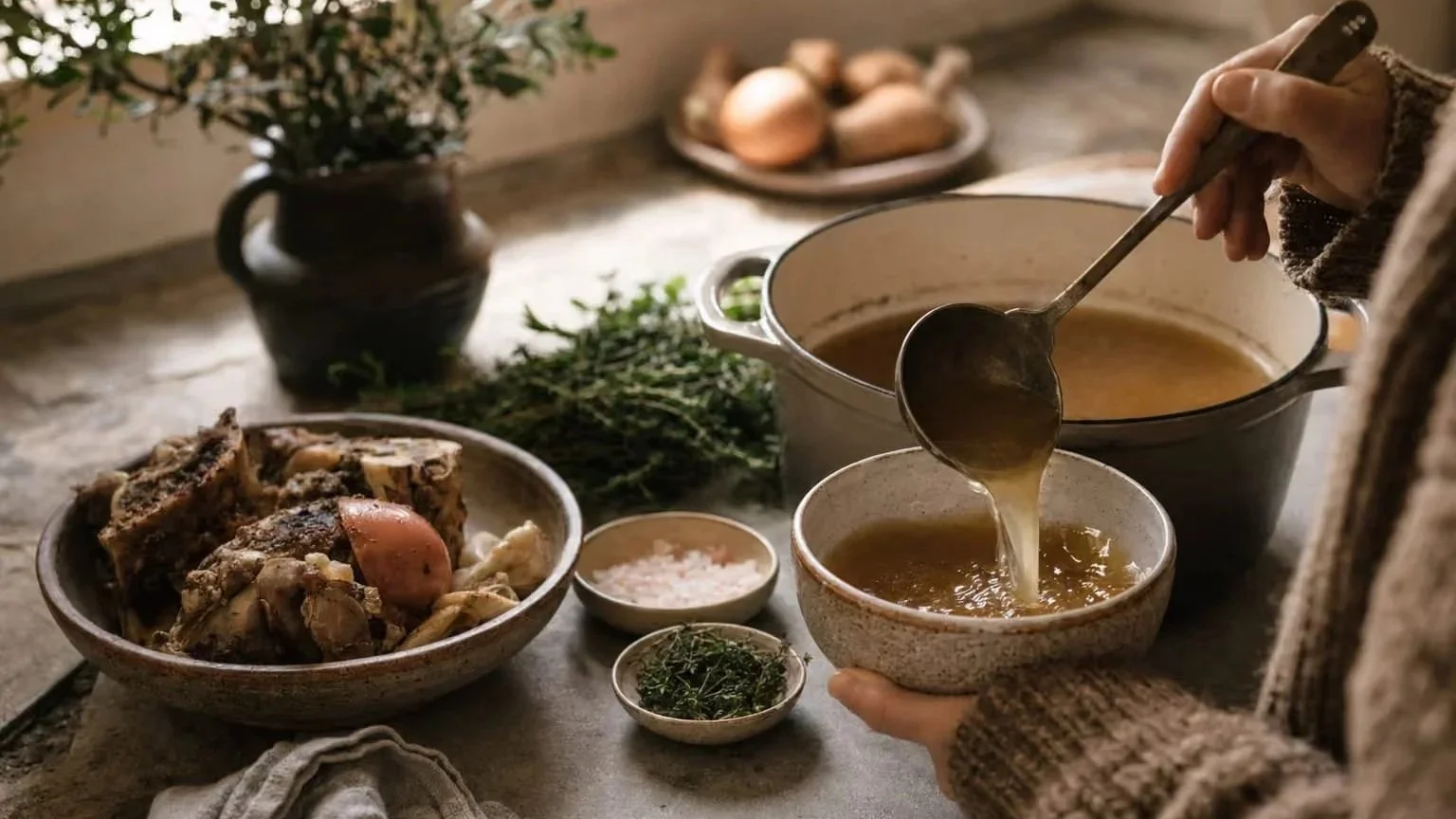
bone broth, sipped warm through the day
miso soup with soft tofu and finely sliced greens
congee or a soft rice porridge made with broth
poached eggs or soft scrambled eggs if tolerated
steamed fish with soft vegetables
blended vegetable soups thickened with lentils
When food tastes different
Taste changes are common. If food tastes metallic, try using bamboo or wooden utensils, and adding lemon, fresh herbs or a little tamari for flavour. If everything tastes bland, slightly stronger seasoning can help. Cold or room-temperature food sometimes has less smell, which can help with nausea.
When appetite is low
Eat by the clock rather than waiting for hunger.
Keep small portions within reach: a cup of broth, a few spoonfuls of soup, an egg.
Sip fluids between meals rather than with them, so you are not filled up by liquid.
Make the most of the times of day you feel best, which for many people is the morning.
Food safety during treatment
Chemotherapy can lower the white blood cells that protect against infection. During those periods your oncology team may give specific food safety advice, for example about raw or unpasteurised foods and fermented foods. Always follow their guidance first.
Coordinating with your oncology team
Every food, supplement and herbal decision during treatment needs to be discussed with your oncology team, because some can interact with treatment. In clinic, everything I suggest is shared with you in writing so you can take it to your team, and nothing is added without their knowledge.
How I work alongside your oncology team
Care is consult by consult, at your pace, and always alongside your oncology team. I assess how you are eating, sleeping and coping with treatment, and put every suggestion in writing so you can take it to your team.
Frequently asked questions
What should I eat on chemotherapy days? Small, warm, simple meals are usually easiest: bone broth, miso soup with soft tofu, congee, soft eggs, steamed fish and blended vegetable soups.
What helps when food tastes metallic during chemo? Bamboo or wooden utensils, a little lemon, fresh herbs or tamari, and cold or room-temperature foods can help.
Can I see a naturopath during cancer treatment? Yes, alongside your oncology team. Every food, supplement and herbal decision is discussed with them first.
Where to start
If you are about to begin treatment or are already in it, an initial consultation is a calm space to plan how you will eat on treatment days and between them, and to prepare questions for your oncology team. Consultations are held online, consult by consult, at whatever pace suits you.
This article is general education. In consultation, every food and supplement plan is coordinated with your oncology team.